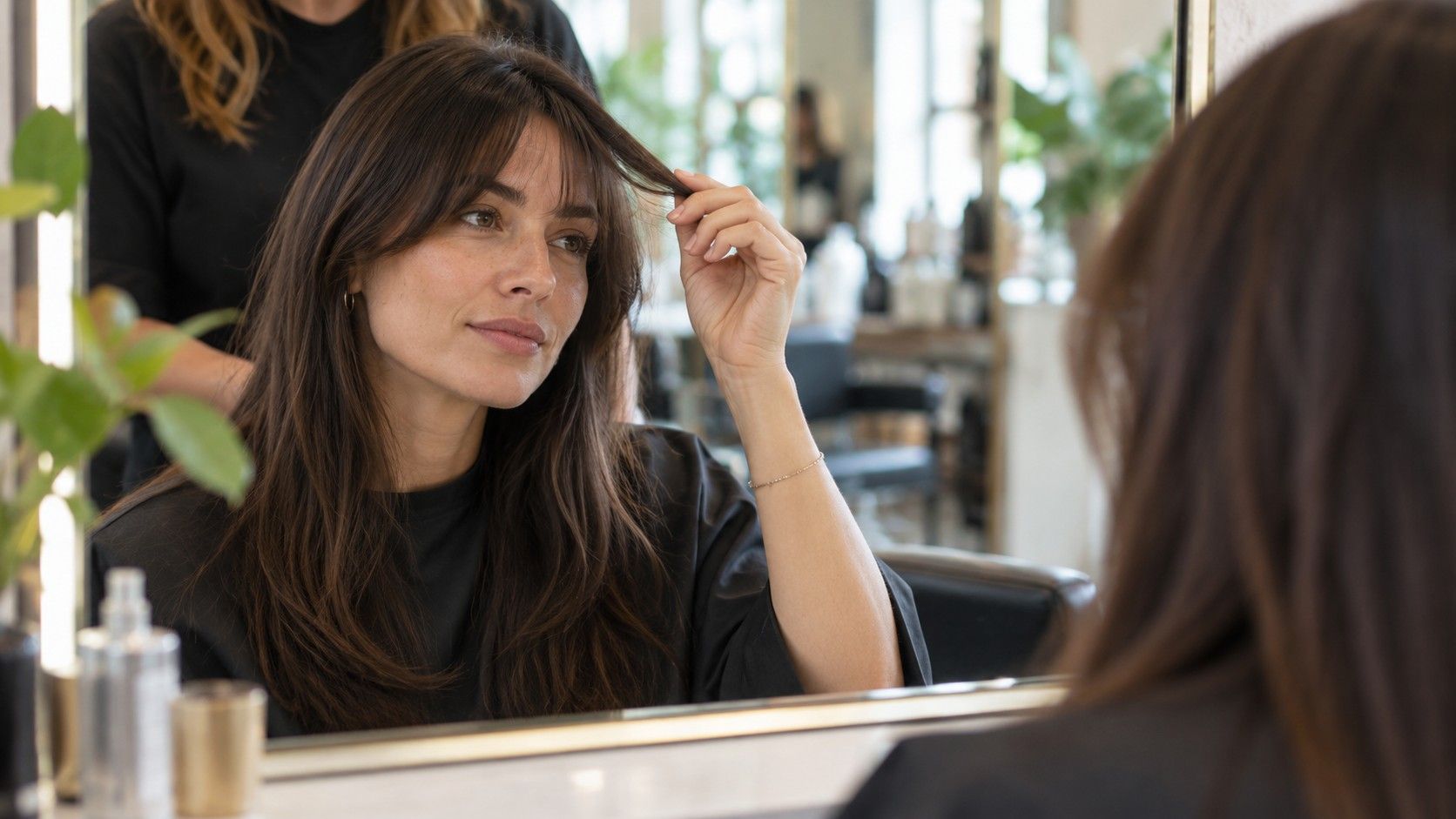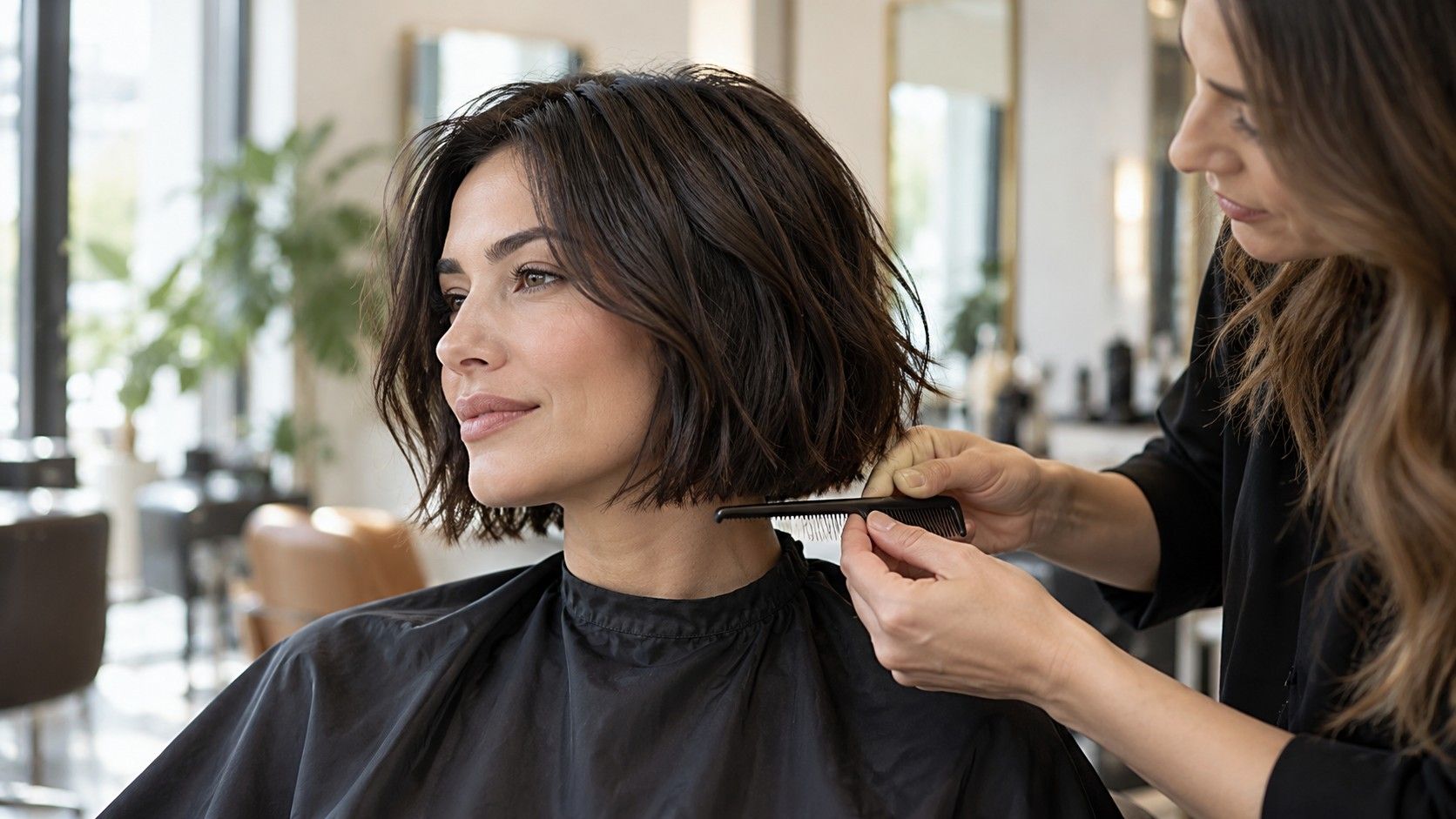
When you are torn between keeping your length and going short, a virtual hairstyle try-on can make the comparison easier to talk through. It lets you test an outline on a photo, but it cannot tell you exactly how a cut will move, grow or feel after a wash. To get a useful comparison, keep the photo conditions steady, explore the lengths between your current hair and the dramatic option, and check each look against the routines you actually have time for.
Start with a photo you can compare fairly
Use a recent photo with your face visible and your hair in an ordinary state. A straight-on view is a practical starting point because it makes changes to the overall silhouette easier to notice. Keep the lighting, head position and expression similar as you switch between styles. If one option is photographed in bright window light and another in a dim room, the apparent density and outline may change for reasons that have nothing to do with the haircut.
Let your hair fall naturally rather than arranging it to hide a cowlick or create a part you rarely wear. If you usually part your hair on the left, keep that part. If you often tuck one side behind an ear, you might save a second image with that familiar styling, but do not compare it with an image where the whole pose has changed. A consistent starting image will not make a preview exact; it simply makes your own reactions more meaningful.
Use the preview to notice broad features: where the hair ends, how much of the neck is visible, whether the front frames your face, and whether you like the balance from the front. The tool may smooth or position hair in ways your real texture cannot reproduce. Make a note of the shape you respond to instead of assuming the simulated strands represent your own curl, wave, density or growth pattern.
Compare the in-between lengths, not just two extremes
The decision is rarely limited to waist-length hair or a very short crop. A collarbone lob, chin-length bob, shoulder-skimming cut or a gradual reduction in length may answer the same wish for change with a different level of commitment. Try a few transition lengths in sequence. Watch how each changes the neckline and the amount of hair around the shoulders; small increments can reveal that what you like is a cleaner outline or lighter feel rather than shortness itself.
A useful sequence starts at your current length, then moves to a modest trim, a shoulder or collarbone length, and finally the shorter option you are curious about. You do not need to test every available style. Compare two or three cuts that differ in a clear way: one with a strong perimeter, one with more movement, and perhaps one shorter shape. That makes it easier to identify whether you are responding to the length, the layering or the styling shown in the preview.
Hair does not behave like a fixed shape while it grows. A bob may pass through a phase where the front and back feel uneven; a layered cut can change its balance as the shortest sections lengthen. If growing out is part of your concern, ask a stylist which transition points tend to feel awkward for the specific cut you are considering and how it could be adjusted along the way. No preview can remove that growth period, but it can help you decide whether the starting shape feels worth it.
Look at the neckline and face framing from more than one angle
A front-facing view can make two styles appear more alike than they feel in daily life. The neckline changes how a short haircut sits against a collar, scarf or jacket, while the back shape matters when you turn or tie hair up. If your try-on tool offers different views, use them as additional references rather than exact renderings. If it offers only a front view, take that limitation into the salon discussion and ask the stylist to explain the side and back plan.
Face framing deserves its own decision. A short cut may expose the ears and temples; a longer one may let you tuck hair away or pull it back. Think about glasses, headphones, work clothes and whether loose pieces distract you during the day. If you like a preview because of the front layers, tell the stylist that those pieces matter more than copying the whole image. They can discuss where the shortest section would sit and how your natural part may affect it.
There is no need to select a style by a face-shape formula. Pay attention to what you personally want emphasized or softened and how comfortable you feel with your features more visible. Try the same image with hair tucked back if you commonly wear it that way. This can help distinguish an attachment to long hair from a preference for having a frame around the face—two reactions that can point toward different cuts.
Test the tied-back version and your normal week
If you rely on a ponytail or bun, check how much length you need to gather it. A shorter style can still allow a small tie-back or clips, but the result depends on the cut, texture and length, so do not count on an app preview to answer that detail. Tell the stylist what you tie back for: exercise, cooking, a commute or simply keeping hair away from your face. They can show where the shortest pieces will land and what options may remain.
Think through a typical week rather than a special occasion. How often do you wash your hair? Do you air-dry, diffuse, blow-dry or use heat tools? Does your current style need daily smoothing, or do you prefer to leave it alone? A short cut may take less time to wash but may need more frequent shaping; longer hair may take longer to dry but offer more ways to tie it back. Those are tendencies to discuss, not guarantees—texture, density and the chosen shape can reverse your expectations.
Ask for a realistic styling demonstration at the salon. A polished finish created with tools and products may look different from what you will do at home. Request a version that fits your usual routine, and ask what will happen on a no-styling day. If a shorter look only appeals when carefully arranged, decide whether that effort sounds enjoyable or burdensome. Likewise, if you keep long hair mostly tied up, ask whether a trim or shape change might give you the refresh you want without losing the option to gather it.
Separate a fun preview from a cut you want to live with
It is normal to enjoy a dramatic preview simply because it is a change. Give yourself a moment to separate novelty from preference: return to the image later, compare it with your current photo, and ask what still feels appealing. You might be drawn to the exposed neckline, a sharper perimeter or the sense of movement. Identifying that feature can lead to a more precise salon request than saying only “make it shorter.”
Save the preview along with one or two reference photos of real hair whose texture and styling look closer to yours. A real-world reference can clarify how the cut behaves from multiple angles, while the try-on communicates the broad idea you are exploring. Neither should be treated as a promise of identical results. Lighting, hair type, growth direction, styling and the stylist's approach all affect the finished shape.
Bring practical questions to the consultation: what is the shortest point, how will the back be shaped, can you tie it back, and what upkeep should you expect as it grows? If you are nervous about a large change, ask whether an intermediate length would preserve more options while you adjust. You can also agree on a checkpoint during the appointment before more length is removed. The important part is that you and the stylist share the same picture of the cut, not that you select the boldest preview.
Use the table as a prompt for your decision, then adapt it to your hair and schedule:
| Comparison | What to check | Useful salon question |
|---|---|---|
| Short cut | Neckline, ears, growth pattern and shape upkeep | How will this look when it grows out for several weeks? |
| Transition length | Shoulder contact, front pieces and tie-back options | Can this length move toward the shorter cut later? |
| Long cut | Drying time, weight and how often you wear it up | Could a shape change refresh it without losing tie-back length? |
| Preview photo | Same pose, light and part for each comparison | Which visible details can my hair realistically support? |
After comparing, choose the question you want the haircut to answer: do you want less weight, a clearer outline, more face framing, or simply a different feeling? A virtual hairstyle try-on is useful when it helps you name that preference and communicate it. The final choice should also make sense in the mirror at home, with your natural texture and your ordinary schedule.