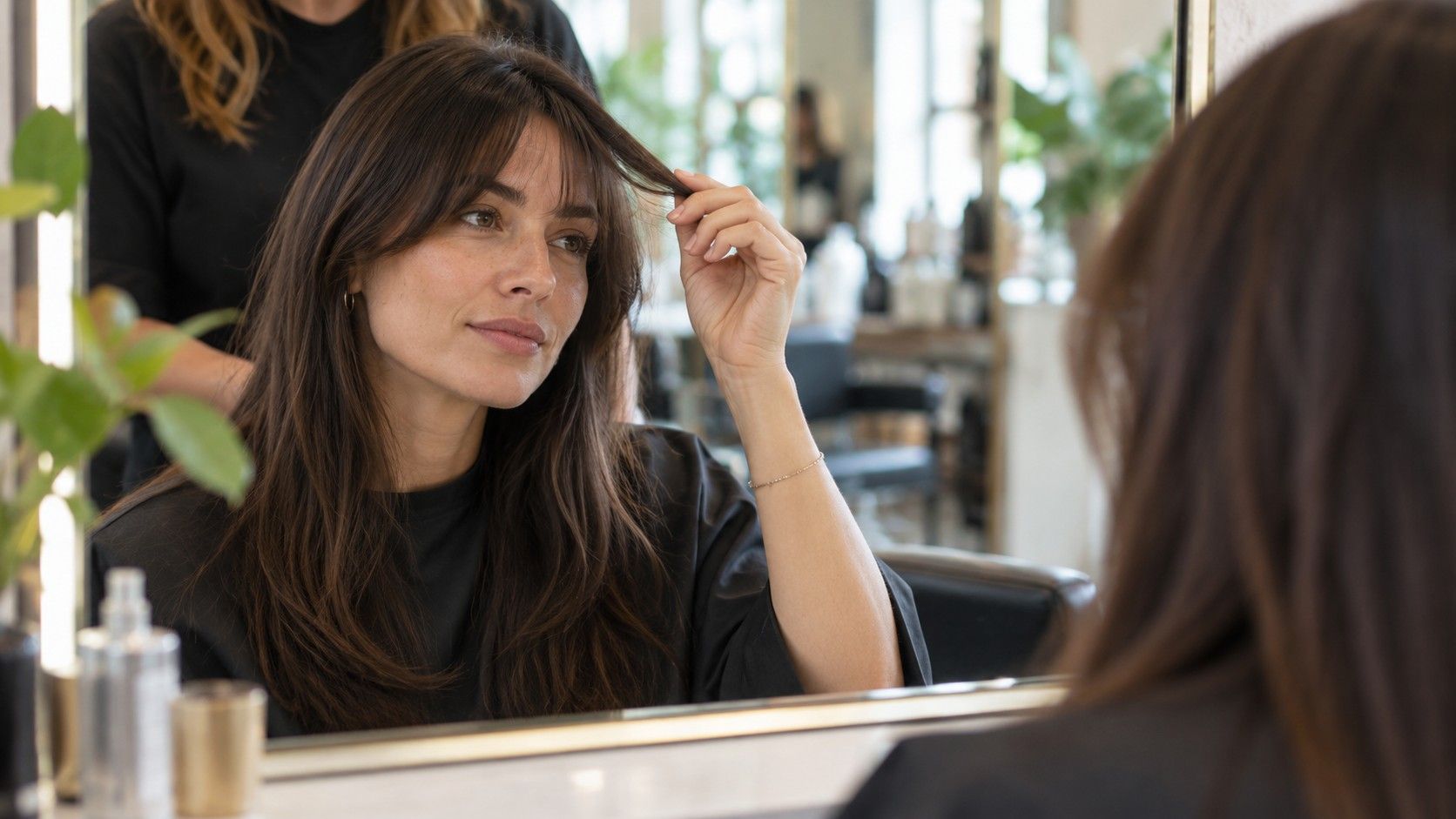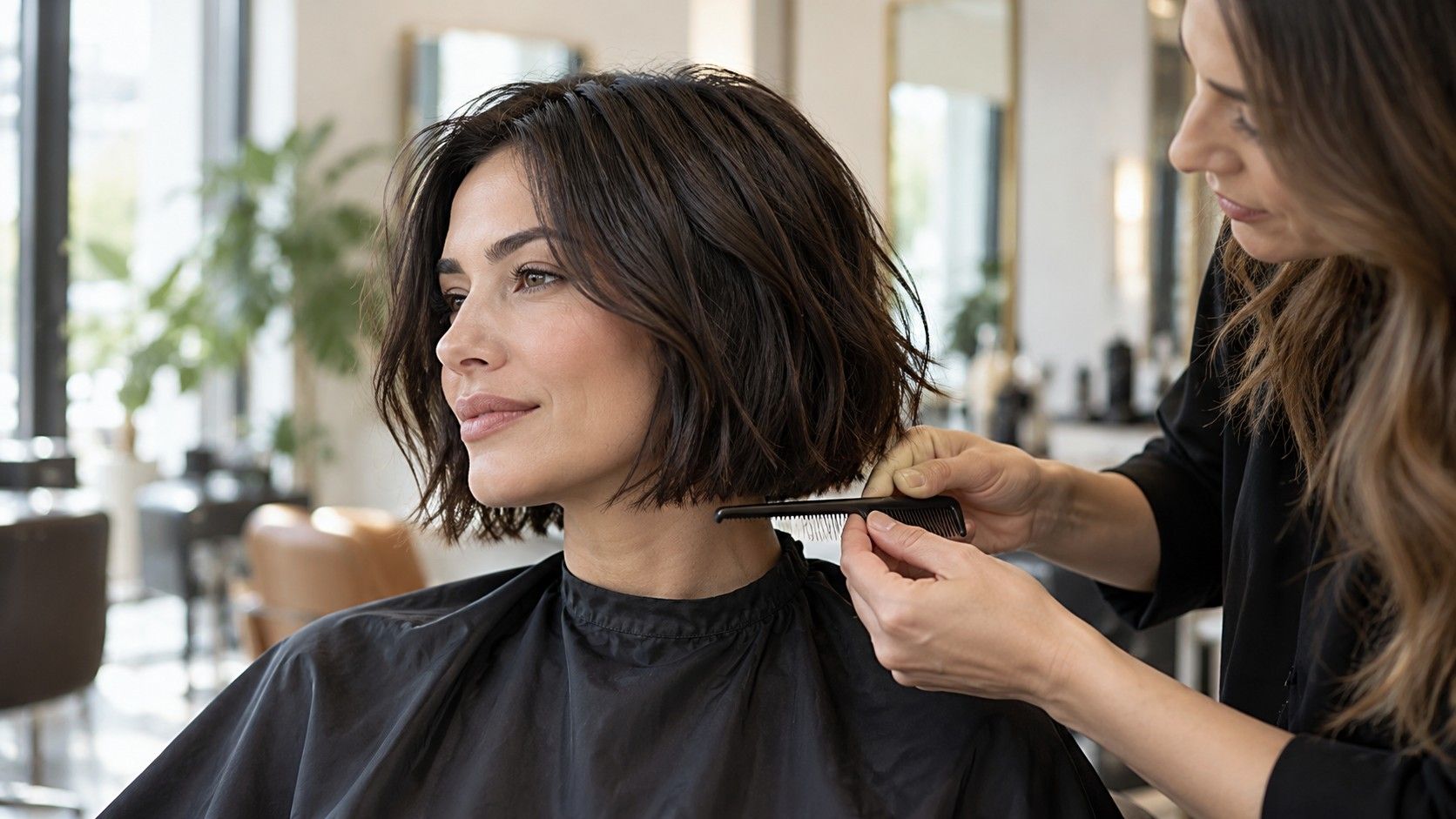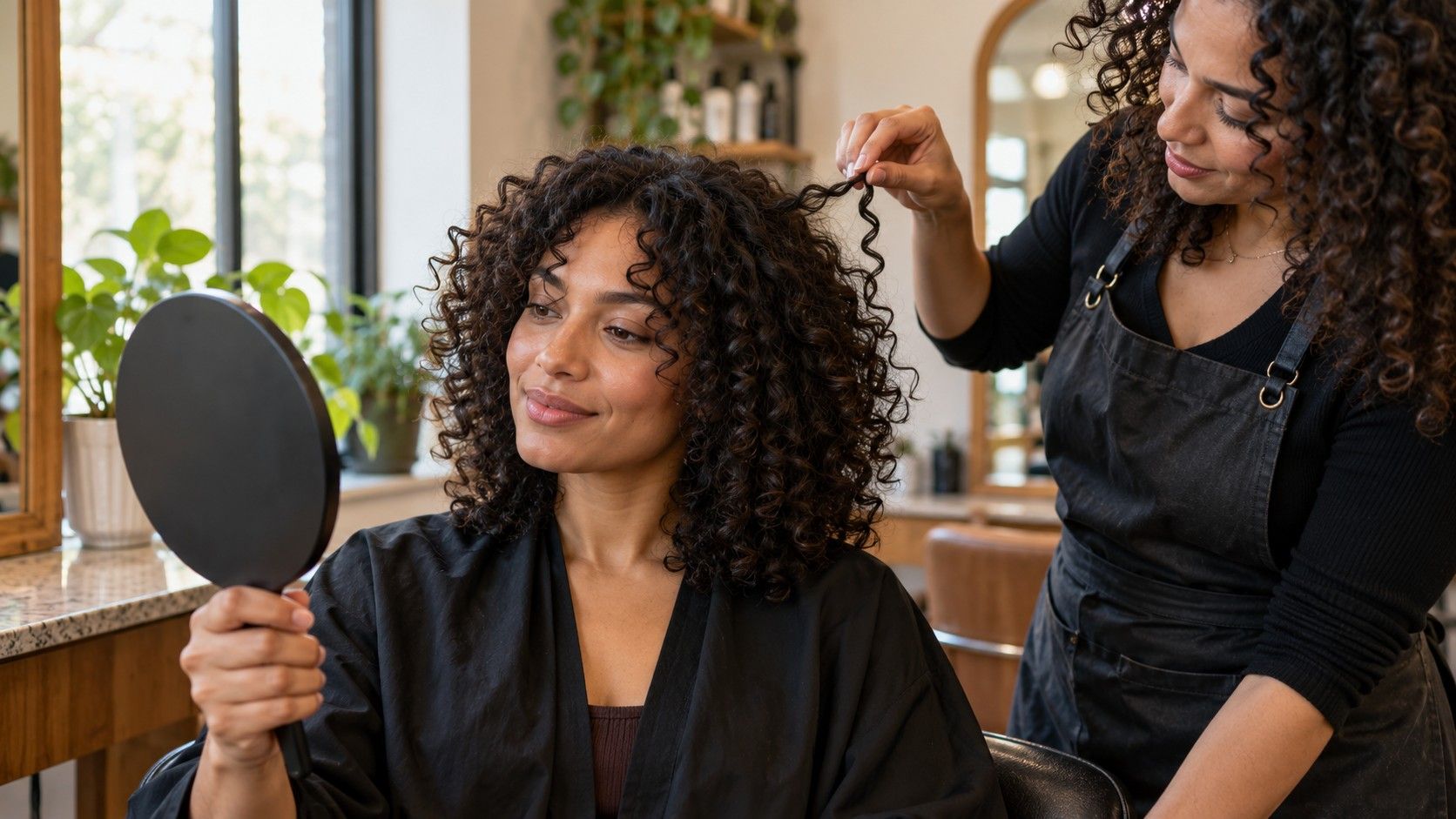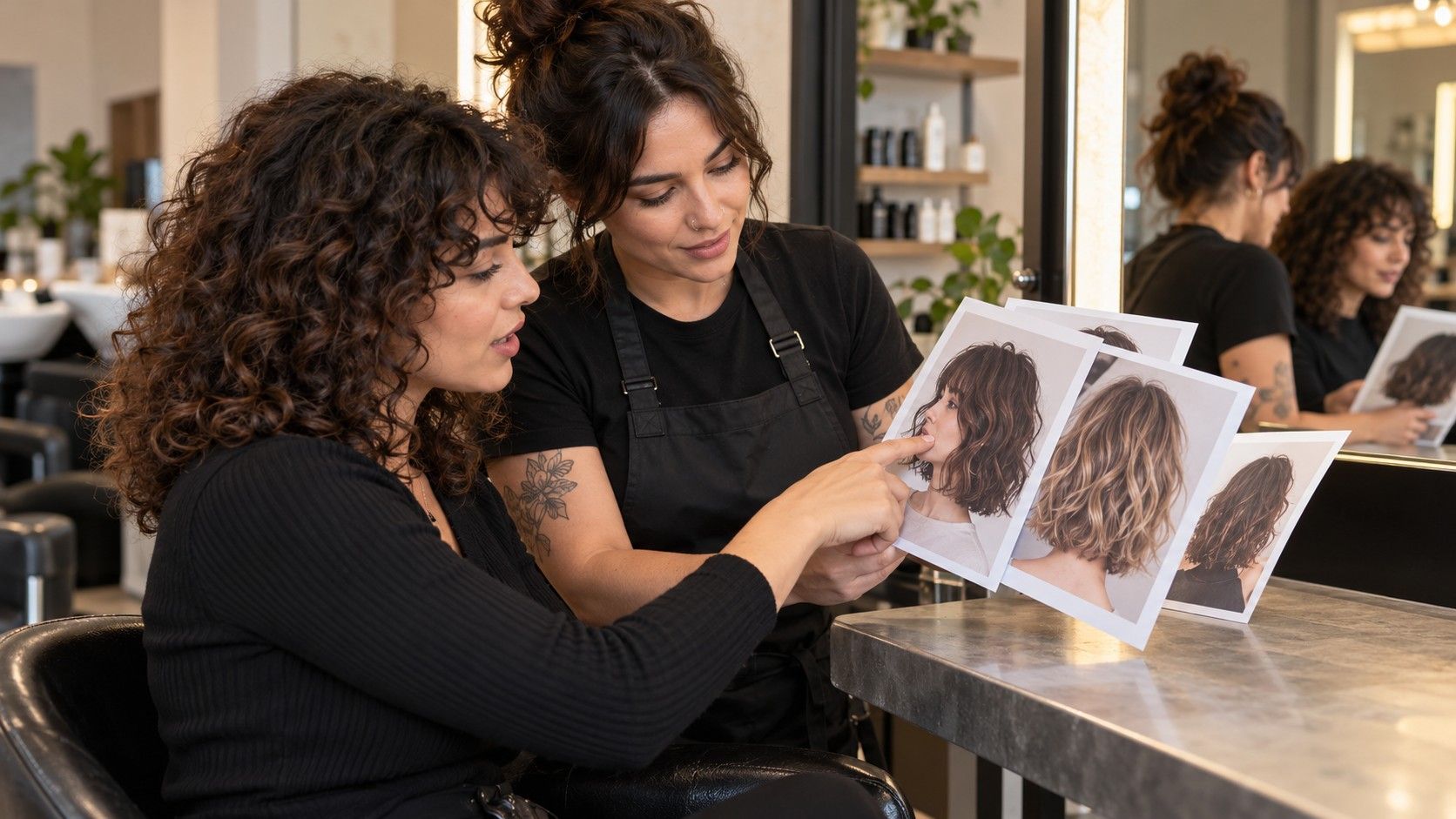
A hairstyle app preview can help you notice what you like about a cut before you book a salon appointment. The useful part is rarely the exact edited image: it is the clue it gives you about length, outline, fringe or movement. A stylist still has to work with your hair texture, growth pattern and styling routine. Bring the preview as a starting point, then describe the details you want to keep and the ones you are willing to change.
When the front view looks right but the side is a mystery
Most hairstyle previews begin with a front-facing photo, so it is easy to focus on the face-framing pieces and miss what happens at the sides or back. A chin-length cut might look balanced head-on while sitting much shorter behind the ears. A layered shape can appear soft from the front but have a strong step at the nape. Before using an image as a salon reference, ask what it leaves out.
If the app lets you compare views, use a level, three-quarter photo as a companion to the front. Keep your head upright and include the neck and shoulders; a phone held high or low changes the apparent jawline and where the ends seem to land. You do not need studio lighting. A window-lit picture taken from eye height is generally easier to interpret than a close crop with overhead shadows.
When you can only save one preview, treat it as a reference for the front silhouette and say so. At the appointment, ask the stylist to talk through the side and back before cutting: “I like how the front sits around the jaw, but I’m unsure about the nape. Could we decide that shape together?” That sentence is more helpful than asking for an exact copy of an image that never showed the full cut.
Look for distortions before you save the picture. An overlay may blur the hairline, cover an ear, make both sides perfectly even or draw a clean edge where your hair would actually separate. Those artifacts do not make the whole preview useless. They are a reason to describe the broad idea—soft around the temples, longer in front, compact at the back—instead of treating every strand as a technical instruction.
When you like the length but cannot name the shape
“About this long” and “this kind of cut” are different requests. Length describes where the ends should fall; shape describes how the perimeter, layers and face-framing pieces connect. A preview can make both look clear at once, yet a stylist needs to know which part matters most. If the image appeals because the ends sit near the collarbone, say that first. If it is the rounded outline or shorter pieces around the face, point to those separately.
Use landmarks on your own body rather than relying on a label such as bob, lob or shag. A cut that ends just below the chin on one person may land differently on someone with a longer neck or a different starting length. “Keep the front below my jaw, with the back close to the neckline” gives the stylist two places to check. You can also bring a current photo so both of you can compare how much length would come off.
For the outline, notice whether the bottom edge looks blunt, tapered, rounded or broken into visible layers. A strong perimeter can make the ends look fuller; removing weight inside the shape may create movement without changing the outside line as much. These effects depend on density, strand thickness and texture. Instead of naming a technique you are unsure about, point to the visual result and ask what approach could achieve it on your hair.
A quick comparison can make the conversation more precise:
| What you notice in the preview | How to describe it | Question for the stylist |
|---|---|---|
| Ends near the jaw or collarbone | “I like this endpoint; please show me where it lands on me.” | How much length will come off, including when my hair is dry? |
| A clean, full-looking edge | “I prefer a solid outline over wispy ends.” | How will my density affect that perimeter? |
| Shorter pieces around the face | “I want some framing, but I need it to tuck back.” | Where will those pieces sit when tied back? |
| Airy movement through the sides | “I like the separation, but not a thin-looking bottom.” | Can we add movement while keeping weight at the ends? |
When you want one part changed and the rest preserved
It is easier to agree on a cut when you name what should stay familiar. Perhaps you like the preview’s fringe but do not want to lose your ponytail. Maybe the outline feels right, while the side pieces look too short for your glasses or work routine. Tell the stylist what you want changed and what is off limits for this appointment. A clear boundary gives them room to adapt the idea without guessing which detail matters to you.
Bring two or three images if you have them, and assign each a purpose. One might show the length, another the fringe, and a third the texture or finish you wear day to day. A stack of nearly identical images can muddy the request; a small set with distinct details is easier to discuss. You can mark a crop or point to a specific area on your phone, but keep the full image available so the proportion is visible.
It also helps to state what you do not want in concrete terms. “No short layers around the crown,” “I need the front long enough to pin back,” or “Please keep the ends from getting too thin” describes a practical limit. Avoid assuming a stylist will infer these from your expression or from the preview. If an image has one feature you dislike, name it before the consultation moves on.
Some choices can be staged. If you are unsure about bangs, ask whether longer curtain pieces would let you test face framing before committing to a shorter fringe. If you are moving from long hair to a bob, you can discuss a first length that still leaves room to go shorter. A gradual plan is not always necessary, but it can be useful when the preview is exciting and the real change feels hard to reverse.
When your hair behaves differently from the edited image
A preview shows a selected finish, not the full range of ways your hair may sit. Wavy hair can bend in different directions as it dries. Curls and coils may spring upward, so a wet or stretched length does not predict the dry outline by itself. Fine hair may separate at the ends; dense hair may hold more bulk near the nape. None of these observations tells you which cut you should choose. They are details to bring into the stylist’s assessment.
Show a picture of your hair on an ordinary day, not only after a special blow-dry. If you normally air-dry, arrive with it in a condition that makes your natural pattern visible, unless the salon has asked you to come with clean, dry hair. Explain whether you use a diffuser, brush, flat iron or styling cream, and how often. The preview becomes a better reference when the stylist can compare the edited finish with the routine you actually want to maintain.
Growth patterns deserve a mention too. A cowlick at the front, a crown that splits in a particular direction, or a nape that grows outward can affect where a fringe or short layer settles. You may have learned to work around these areas without thinking about them. Point them out before the cut, especially if the preview shows hair lying unusually flat or falling in a direction yours does not naturally follow.
Think about styling effort in specific terms. “I have five minutes in the morning” is more useful than “low maintenance.” So is “I will use a diffuser on wash days, but I do not want to heat-style every morning.” Ask how the suggested shape will look between washes and what, if anything, you would need to do to recreate the image. A stylist may offer a version that works with your habits or explain the trade-off plainly.
When a big change feels tempting but the first step is unclear
Use the consultation to turn a broad idea into a sequence of choices. Start with the detail you feel most certain about: perhaps a longer fringe, a softer perimeter or less weight at the sides. Then ask which parts of the preview depend most on your texture and styling. This separates the parts you can decide now from the parts the stylist needs to evaluate in person.
Before the first cut, agree on a clear checkpoint. The stylist can section or hold the hair at the proposed length and show you where it will fall. For a fringe, you can discuss the shortest point and how it will look when it dries. For a major length change, confirm the target landmark and whether the cut will be shaped wet, dry or in stages. You do not need to direct every movement of the scissors; you do need a shared understanding of the outline.
Talk about upkeep without expecting an exact calendar. A crisp short shape may show growth sooner than a longer, softer cut, but the interval depends on the haircut and how quickly your hair grows. Ask what will change as it grows out and whether the shape can be maintained with a less frequent trim. If regular appointments are difficult to schedule, mention that before choosing a silhouette that depends on a sharp edge.
Finally, check that you can summarize the plan in your own words: “Keep the length below my shoulders, add long face-framing pieces, and leave enough at the front to tie back.” If the summary does not match the image, ask another question while there is still time. A digital preview has done useful work when it helps you explain the result you want, the compromises you accept and the features you want the stylist to preserve. The finished haircut will be shaped by your real hair and the conversation in the chair, not by the pixels alone.