A haircut can look effortless in a photo and still ask for ten minutes with a dryer every morning. The useful question is not which style is called low-maintenance, but what you want to do with your hair on an ordinary Tuesday: wash it at night, let it air-dry, smooth one section, or leave the house with it tied back. Start with that routine, then choose a shape that works with your texture and the amount of upkeep you are willing to schedule.
If mornings are rushed, choose a shape that works before styling
Think about the first fifteen minutes after you wake up. If there is no time to section the hair or use a hot tool, the cut has to settle into a shape you can live with after a quick brush, a little water, or no intervention at all. A blunt perimeter can make the outline feel deliberate, while long layers may give movement; either can be easy or demanding depending on density, texture and how the hair falls around the face.
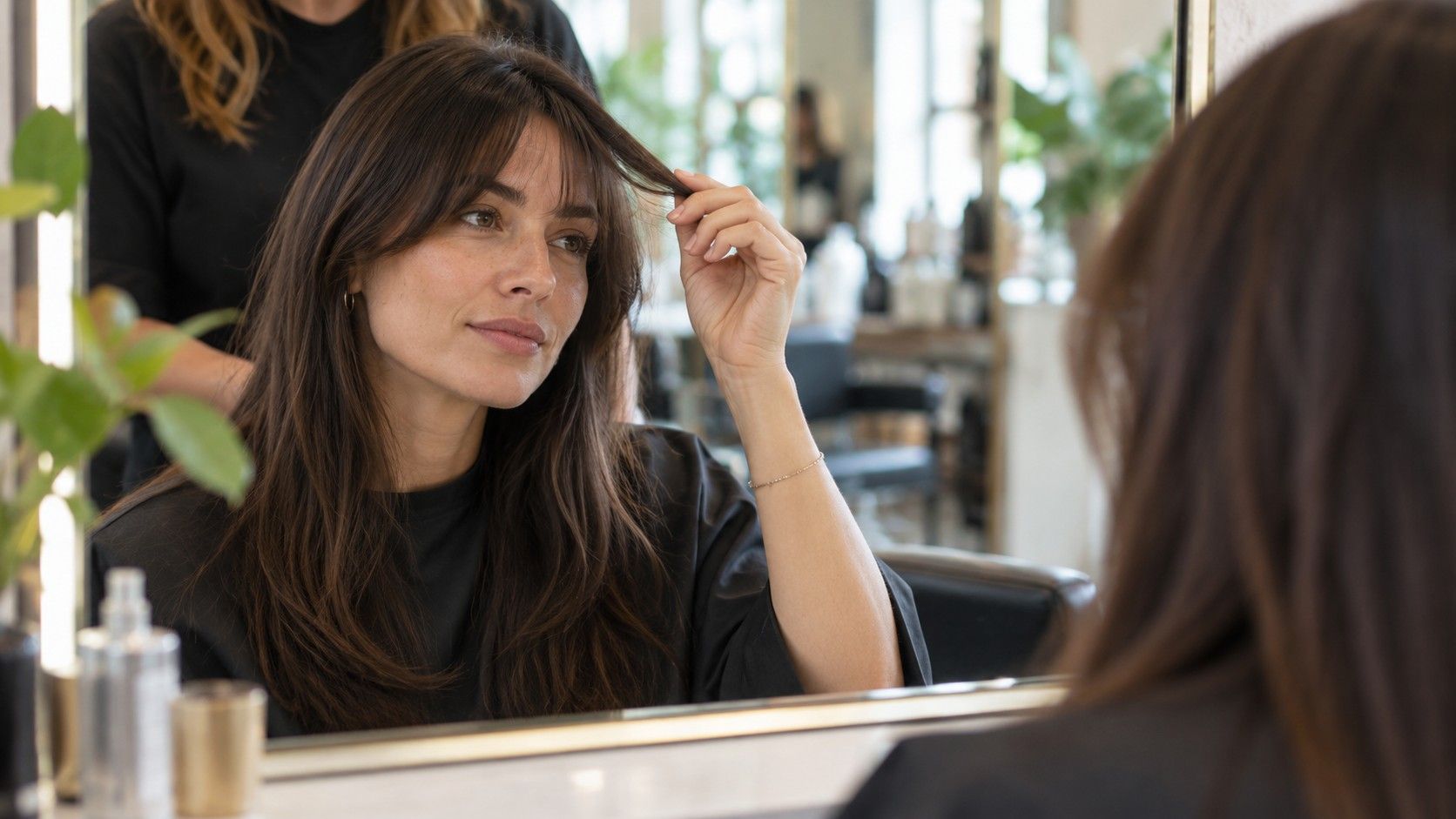
Ask your stylist to discuss the exact part of the routine you want to skip. “I do not want to blow-dry every day” is more useful than “make it easy.” If you usually wear a side part, say so before the first cut: a fringe or face-framing piece designed around a center part may fall awkwardly when redirected. Cowlicks at the hairline and a strong natural part also matter. A photo taken with your hair in its usual part can help the conversation, but it cannot show how the cut will behave on every wash day.
Consider where the hair lands when it dries naturally. If the ends flip outward at the shoulders, ask whether a slightly shorter length or a different perimeter would reduce that daily adjustment. If your hair expands in humidity, a heavily layered outline may need more shaping than you expect. The aim is not to make every strand behave identically; it is to choose a silhouette whose ordinary version still feels intentional.
If you air-dry, plan for your real texture and wash schedule
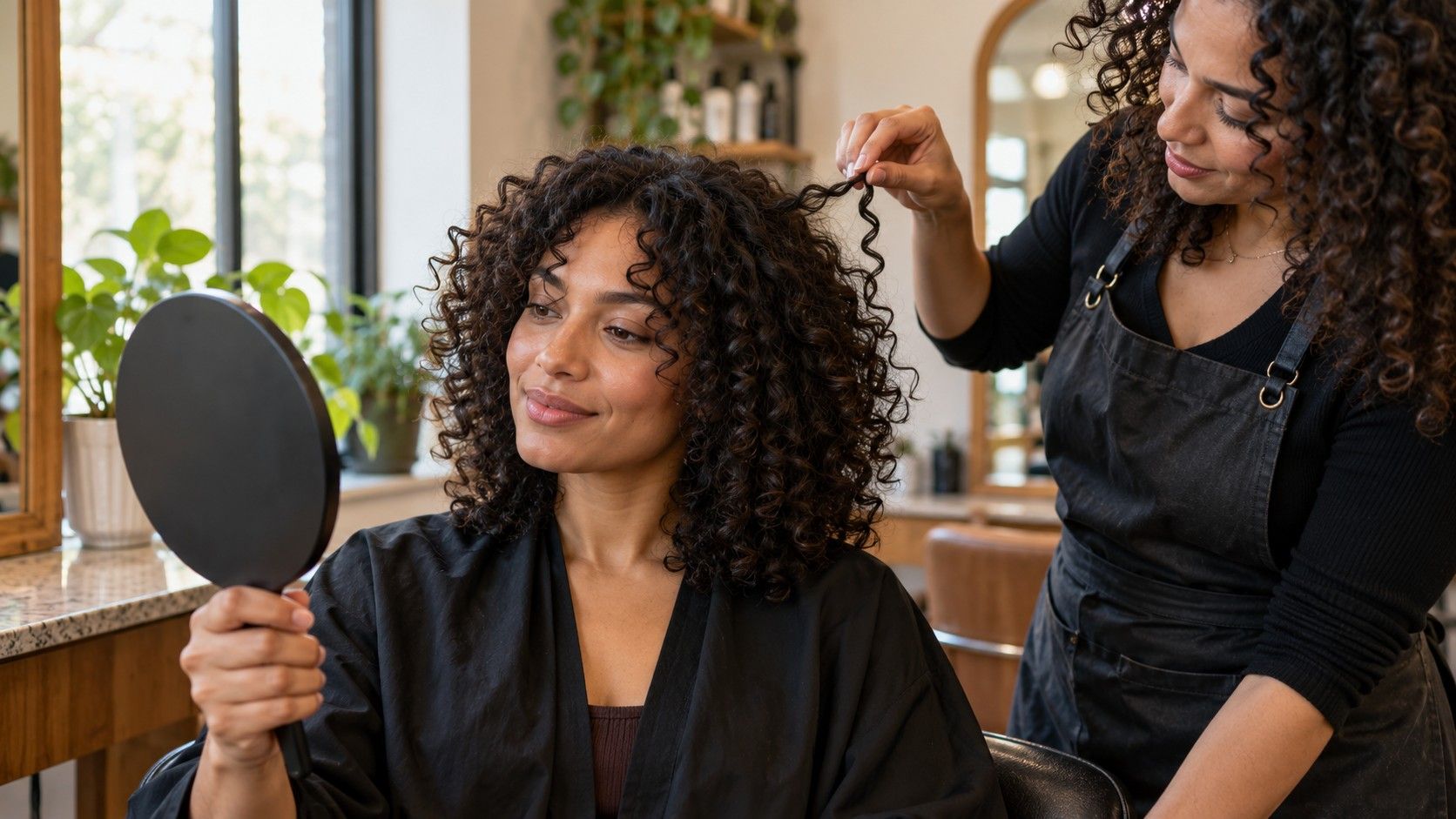
Air-drying is a habit, not a finish that looks the same on every head. Wavy hair may form uneven bends, curls may spring up as they dry, and straight hair can still develop a bend where it touches a collar. Bring that reality into the haircut decision. A stylist who sees your hair wet and stretched may need to ask how it looks fully dry, especially if you have shrinkage, a wave pattern or sections that dry at different speeds.
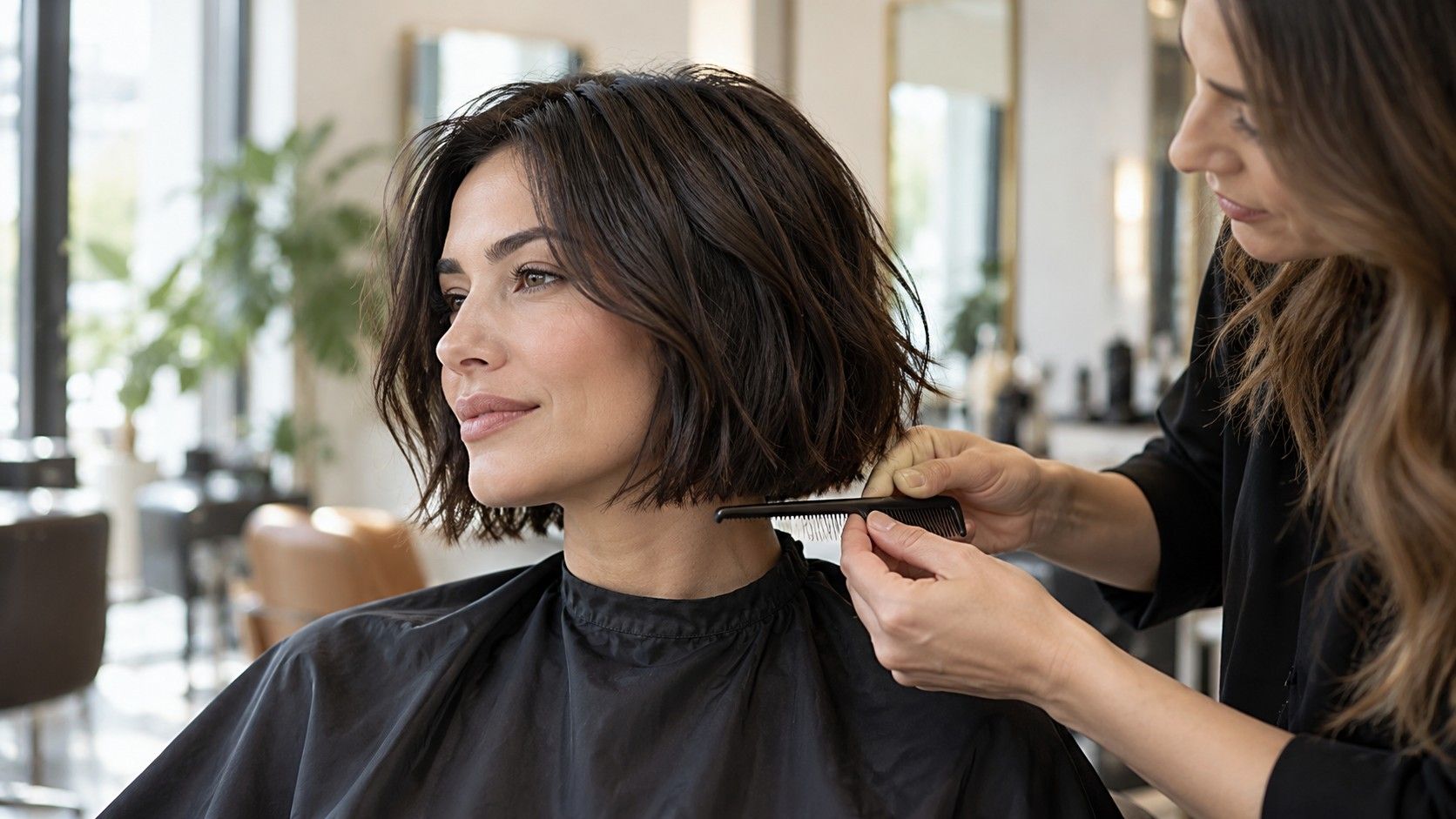
For a wash-and-go routine, ask what the cut is expected to do without a round brush. Long, blended layers can distribute bulk, but too many short layers may separate into pieces that need product or deliberate drying. A one-length or softly shaped edge can reduce the number of sections that need arranging, though it may feel heavier on dense hair. There is no universal low-work option: the same bob can air-dry neatly for one person and puff out for another because their textures and growth patterns differ.
Talk through how often you wash, whether you use conditioner near the roots, and what you do after washing. Those details influence the look you can repeat. If you tie damp hair back before work, mention it; a fringe may dry with a bend, and short layers around the temples can escape a ponytail. If you wash at night, explain whether you go to bed with damp hair. A haircut should be planned around that familiar sequence rather than an ideal routine you do not intend to adopt.
If you want to keep your length, decide how much shape you need
Keeping length does not mean keeping one unshaped line, but adding layers can change the daily work. Long layers may help thick hair feel lighter and allow movement through the ends. On fine hair, removing too much from the perimeter can make the bottom look sparse, so ask to see how much length and density would remain. A small change around the face may be enough if your main goal is to stop the front pieces from hanging heavily.
Bring two or three reference photos that show the length you are willing to maintain, preferably from the side and back as well as the front. A front-facing image can hide where the shortest layer begins or how the ends sit at the shoulders. Point to the feature you like—such as a soft outline, a curtain fringe or movement at the cheekbones—and say what you would not copy. Hair photos are useful for naming a shape, not for promising an identical result; texture, density and styling are part of the picture too.
Be specific about ponytails, clips and work requirements. If you need to secure all of your hair, the shortest layers must still reach the tie or be easy to pin. If you exercise often, a fringe that falls into your eyes may be irritating even when it looks good after styling. Ask the stylist to test the proposed front length against a loose ponytail before cutting. It is a simple check that can reveal whether the pretty framing pieces will become daily flyaways.
If you dislike heat styling, check the shape without a hot tool
Say plainly which tools you use and how often. “I might curl it for an event” is different from “I straighten it before work.” If the reference style depends on a smooth blowout, ask the stylist to explain what the cut looks like with your usual finish. A haircut can support a tool-free routine, but it cannot remove every natural bend, cowlick or change in texture caused by weather.
For a salon consultation, describe one ordinary wash day and one day when you make an effort. Ask which details of the proposed cut will still read clearly on the ordinary day. A softly rounded bob, for example, may need a particular direction of drying to keep its edge tucked under; if you will not do that, ask whether a more relaxed outline would suit you better. Likewise, bangs can be trimmed to sit with a natural part, but they may still need a quick reset after sleep. Agree on what “low effort” means in minutes and steps, not as a vague promise.
A virtual preview can help you discuss length and broad silhouette, but it cannot settle how much styling the cut will need. The photo angle, lighting and how the image tool represents texture can change what you see. Use the preview to decide whether you want to explore a bob, layers or fringe, then ask a stylist to assess your growth pattern and hair in person. A screen image is not a measurement of how your own hair will fall after washing.
If salon visits are hard to schedule, ask about the growing-out phase
A style can be quick to arrange at home and still need frequent reshaping. Short cuts, precise fringes and crisp outlines may show growth sooner than a longer, softer shape. The interval that works depends on the individual cut and how much change you notice as it grows; ask the stylist what will happen around the ears, neckline and fringe after several weeks. You do not need an exact forecast—just a realistic description of which parts are likely to lose their original outline first.
Ask for a plan that includes the next stage, not only the day-one finish. Moving from a short crop toward a bob raises a practical question: where will the in-between length sit, and can the shape be adjusted without undoing the progress? During bang grow-out, ask how the front can be blended into the sides. These questions help distinguish a cut that is easy to style from one that is easy to live with between appointments.
Before leaving the salon, repeat the maintenance plan in practical terms: how to refresh the shape, whether a small trim is optional or central to the look, and what to do if you decide to grow it longer. Avoid agreeing to a schedule you already know you will not keep. A good consultation should leave room for your actual calendar and for uncertainty about how your hair responds once you wash it at home.
How to describe your routine and make a confident choice
Write down a short account of your week before the appointment: how often you wash, whether you air-dry, how many minutes you will spend styling, what tools you own, and how long you prefer to wait between cuts. Include the ways you wear your hair most often—down, tied back, tucked behind the ears or under a hat. This gives the stylist useful constraints instead of asking them to infer your routine from a polished reference image.
Then rank the trade-offs. You may prefer a little morning styling in exchange for keeping length, or accept a more frequent fringe trim to avoid having hair in your eyes. You might choose a softer shape that grows out quietly instead of an exact edge that looks sharp for a shorter period. There is no single correct balance; the best choice is the one whose maintenance you are willing to repeat.
Before deciding, ask the stylist to describe the cut in everyday terms: what it will do after your normal wash, what part may need attention, and what changes if you skip styling. When uncertain, choose a conservative first step, such as shaping the ends or adding restrained face-framing pieces, then reassess after living with the change. A haircut is easier to adjust when the conversation has made your limits clear. The goal is a shape that feels like yours on an ordinary morning, with upkeep you have actually agreed to.