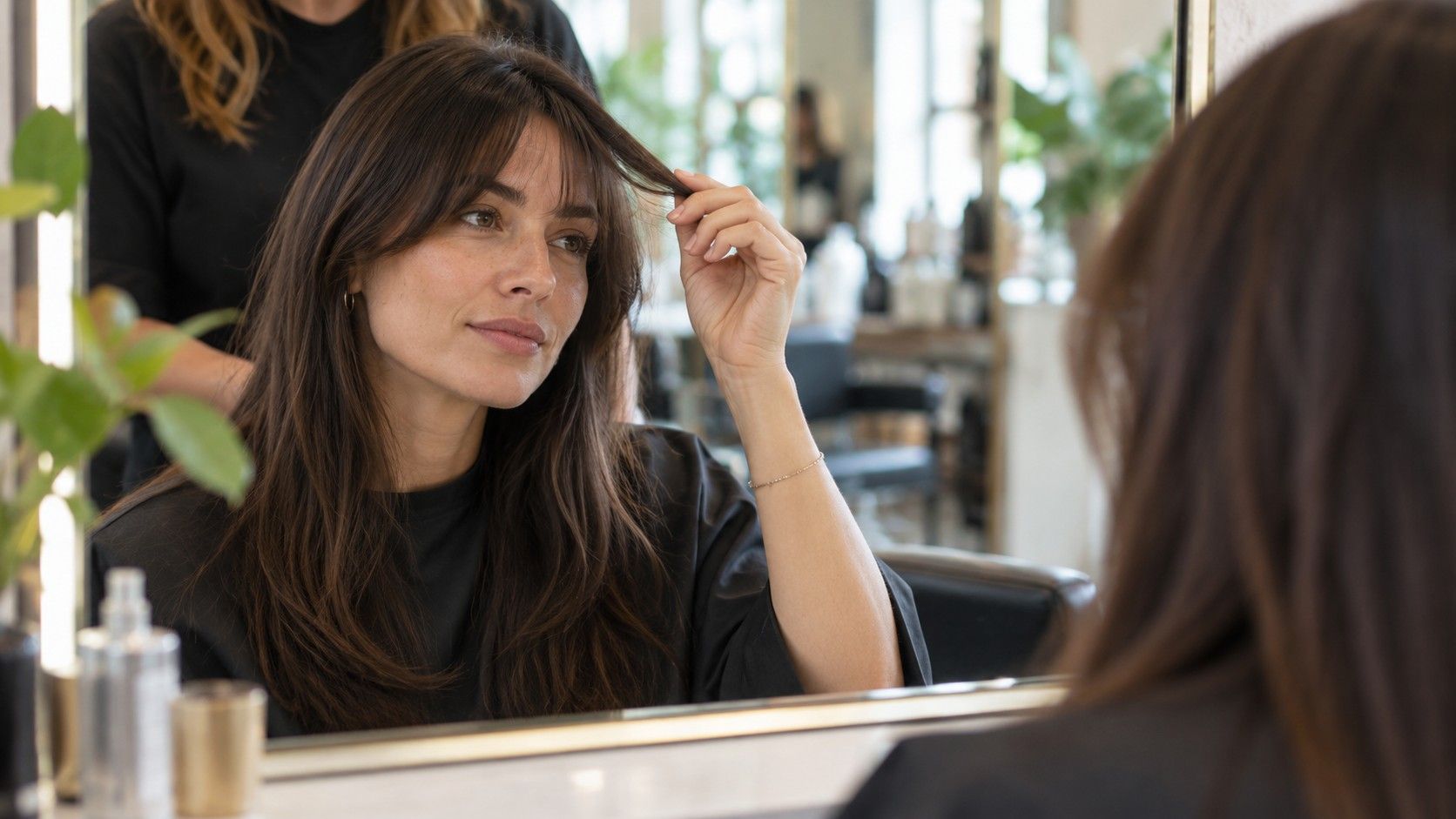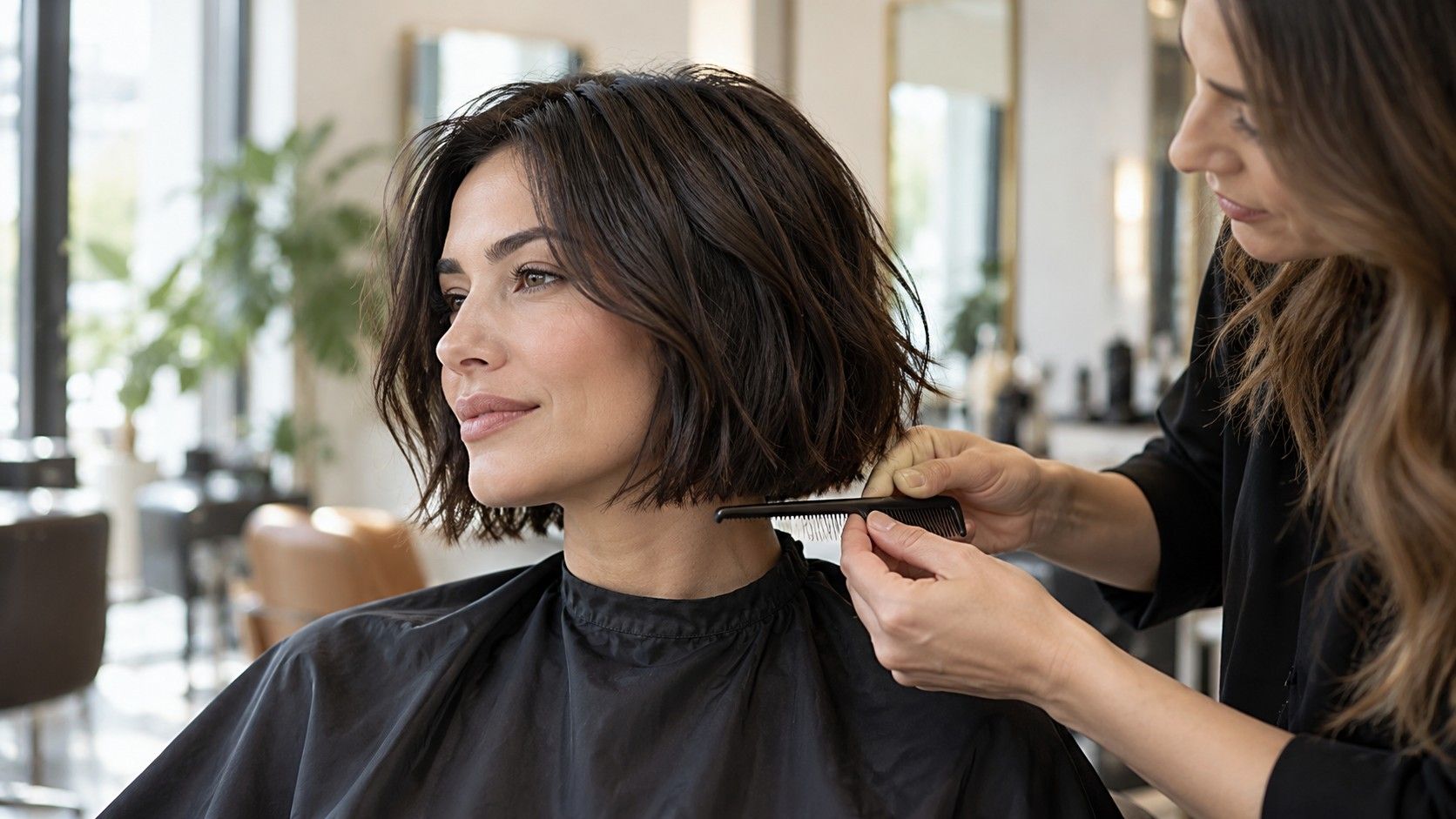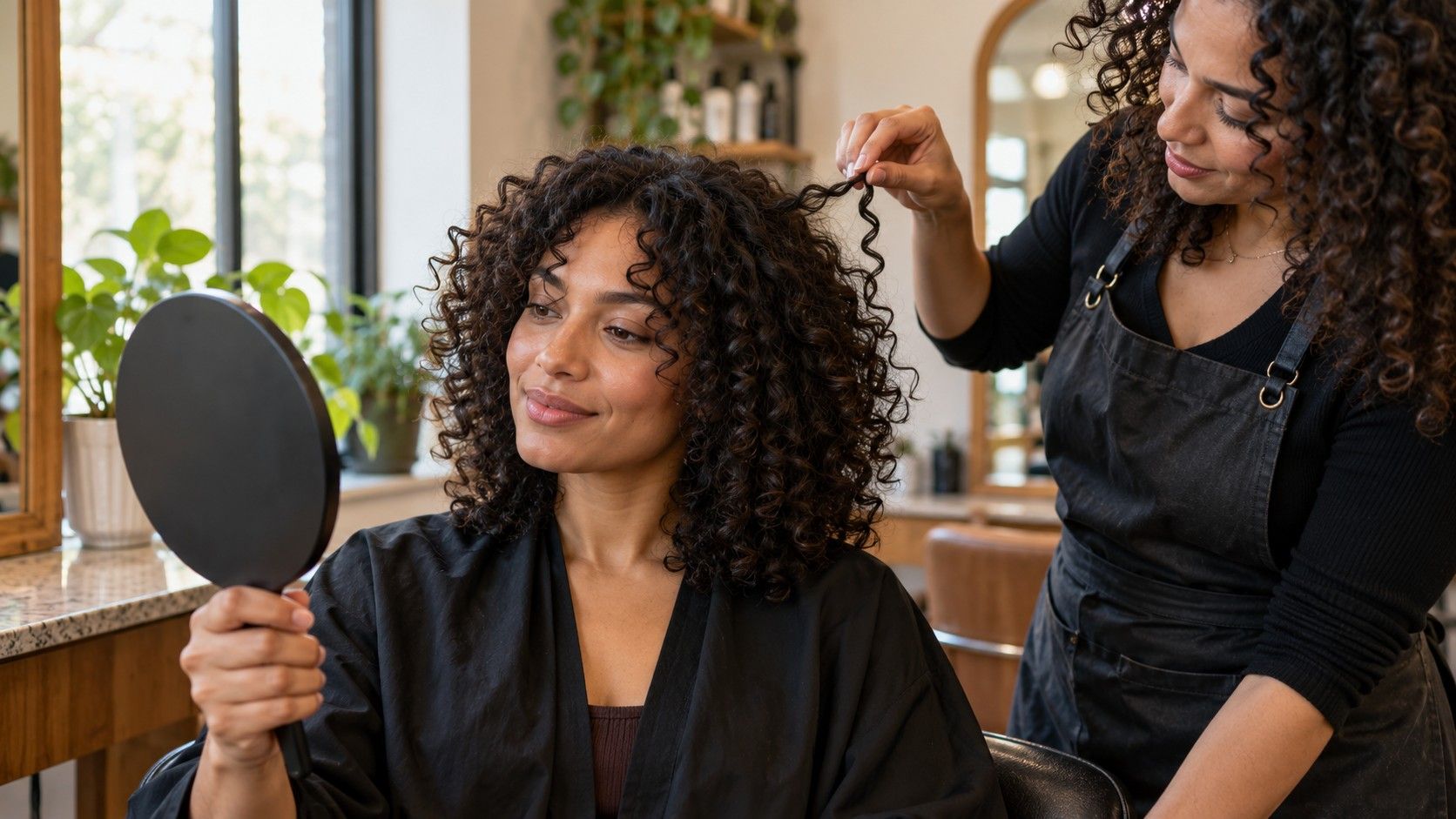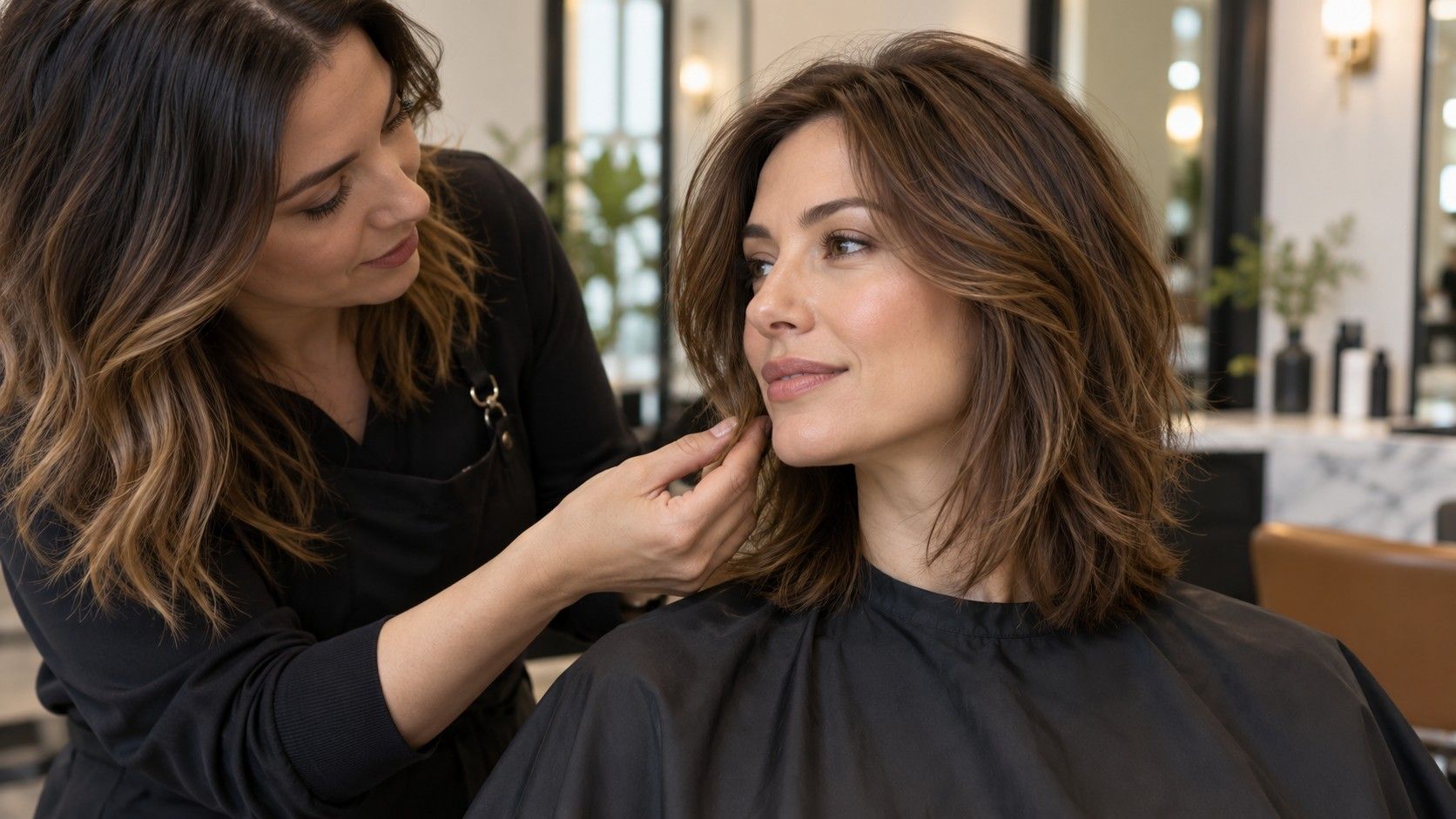
A face-shape chart can help you compare haircut ideas, but it cannot choose a style for you. The useful question is how length, framing and volume work with your features, hair texture and daily routine. Treat the labels as a starting vocabulary, then test the ideas against references and a realistic salon conversation.
Treat face shape as a starting point, not a verdict
Face-shape guides give you a quick way to talk about a forehead, cheekbones, jaw and chin. The trouble starts when a broad label is treated as a diagnosis that dictates one correct cut. Faces are not clean geometric templates. Two people described as having an oval or round face can have different proportions, features and preferences, and may want very different things from a haircut.
Begin with an ordinary, straight-on photo rather than trying to measure your face against a perfect diagram. Keep your head level, move hair away from the cheeks if you can, and notice the overall outline. You might see that your jaw is the widest point, that forehead and jaw feel similar in width, or that your face appears longer than it is wide. Those are observations, not instructions.
Turn that observation into a shortlist of what you would like a haircut to do. Maybe you want more movement near the jaw, a clearer outline around the cheekbones, or less hair falling forward while you work. That is more actionable than asking which cut is allowed for a face shape. It leaves room for a style you like even if a chart would file it under a different category.
Face shape can be a helpful prompt when you are stuck between references. It is less useful as the final filter. A haircut still has to work with your hair's density, texture, growth pattern and the effort you are willing to spend on it. If those factors point toward another option, the chart has done its job by starting a conversation; it does not need to win it.
Notice proportions without trying to correct them
People search for hairstyles for round, square, oval, heart-shaped or long faces as if each label has a matching formula. A better use of those categories is to describe proportions you notice. If your face looks broadest through the cheeks, ask how different lengths sit beside that area. If the forehead seems wider than the chin, compare how a fringe changes the balance. Neither observation means something is wrong or needs hiding.
Compare references at a similar viewing angle. A close selfie shot from below can make the jaw look different from a portrait taken at eye level, and a turned head changes the visible outline again. In a virtual hairstyle preview, keep the base photo and lighting consistent while switching between cuts. You can then judge the hair more fairly instead of mistaking a camera change for a haircut effect.
Length changes where the eye pauses. A bob ending near the jaw draws attention to that line; a longer shape may place more visual weight below it. Layers can change the outline without removing much length, while a fringe changes the relationship between the forehead and the rest of the face. These are effects to compare in your own references, not fixed promises about how a cut works on everyone.
If the label itself feels uncertain, set it aside. Describe the feature you want to emphasize, the area where you prefer less bulk, or the way you like hair to frame your face. A stylist can work with that language. It is clearer than arriving with a rule such as “long faces must have bangs” or “a square jaw needs soft layers.”
Compare framing and volume where you notice them
Face-framing pieces are easiest to evaluate when you look at where they begin and end. In one reference, shorter layers may start around the cheek; in another, the first movement may sit near the collarbone. Ask whether that placement gives you the look you want and whether your hair naturally falls there. A loose layer on a styled photograph may sit differently on hair with another texture or density.
Volume is equally specific. The question is not simply whether you need more or less, but where you want it. A rounded shape at the sides, height near the crown, or fullness below the jaw can change the silhouette. If a preview makes the sides look unusually wide, check whether the image has added bulk or whether the reference cut is genuinely shaped that way. A screen can suggest a direction; it cannot settle how the cut is constructed.
Consider movement from the front and the side. A shoulder-length cut may feel balanced in a straight-on image yet flip outward at the ends in profile. A fringe can frame the eyes in a posed picture but need daily shaping to stay there. Save references that show more than one angle when possible, and notice the hairline, part and natural direction of growth.
A useful comparison changes one element at a time: length, fringe, parting or layer placement. If two references differ in all four, it is hard to tell what you are responding to. A controlled comparison can turn a vague preference into a salon note: keep the perimeter, add face-framing pieces, or leave the fringe long enough to tuck away.
Let texture, density and routine change the shortlist
The same outline does not behave identically on straight, wavy, curly or coily hair. Texture affects how a layer separates, how a fringe springs up, and whether a rounded shape stays smooth or expands as it dries. Density matters too: fine hair and dense hair can have different weight and movement even when the cut has the same name. A face-shape suggestion that ignores these details is incomplete.
Your natural growth pattern belongs in the decision. A strong cowlick near the front may push a fringe away from the direction shown in a photograph. Hair that grows forward at the crown can change how a short cut settles. These details are part of the material a stylist works with. Mention them before discussing how closely you want to copy a reference.
Routine is a real design constraint. If you normally air-dry, ask what the shape looks like without a round brush or a full set of hot tools. If you are happy to style for an event but want easy mornings, say so. A cut that looks appealing only after a technique you do not plan to use may not feel like a good result in daily life, regardless of how well it appears to match a chart.
Maintenance changes the meaning of a suggestion, too. A precise fringe or a sharply defined perimeter may need more frequent shaping than a softer, longer outline. There is no universal schedule that suits every person and salon, so ask how the chosen shape grows out and what signs would tell you it is time for a trim. That makes the choice more concrete than an abstract label.
Use previews as comparisons, then explain the result
A virtual hairstyle preview is most helpful as a way to compare silhouettes. It can help answer questions such as “Do I prefer a shorter outline?” or “Do I like hair around my cheeks?” It cannot reproduce every detail of a real cut, including the way your hair separates, its weight, movement and response to styling. Small differences in photo angle can also change how a shape reads.
Start with a clear photo where your face is visible and your head is close to level. Keep the original image unchanged as you compare hairstyles. Look at the hairline, part, side volume and ends rather than judging only whether the overlay looks polished. The point is to identify a direction to discuss, not accept an image as a prediction of the salon result.
Bring two or three references and a short note about what you like in each. One might have a length you prefer, another a fringe shape, and a third a softer outline. Tell the stylist which parts matter and which are flexible. A photo without explanation can invite assumptions; a few precise observations make it easier to translate the idea to your texture and proportions.
Ask how the cut is likely to look during ordinary styling and as it grows out. If you are making a major change, ask whether a staged adjustment would let you assess the shorter length before going further. The best suggestion is not the one that wins a face-shape chart. It is the one that makes sense with your features, hair, habits and the way you want to feel wearing it.