When hair is fine, a haircut can look airy in one photo and unexpectedly sparse in another. The reason is that “fine” describes the width of each strand, while density describes how many strands grow across the scalp. Those details, along with your part, cowlicks and morning routine, matter more than a universal rule about which cut makes hair look thick. Compare shapes as possibilities, then take the details that suit your own hair to a salon consultation.
First work out what “fine” means for your hair
Run a few strands between your fingers and notice whether individual hairs feel delicate; then look at how much scalp shows when your hair is dry and parted as usual. You may have fine strands with plenty of density, or fine strands that are also relatively sparse. These are different starting points. A full head of fine hair can often support movement and layers, while a lower-density area may call for a shape that keeps the ends looking connected. Neither observation dictates one haircut, but both make the conversation with a stylist more specific.
Pay attention to where your hair naturally separates. A strong center part, a crown whorl or a temple area that sits flatter can change the balance of a style. A photograph can help you notice these patterns: take one from the front and one from the back in ordinary daylight, with your hair in its usual condition. Avoid pulling it tight just to create a neat outline. The point is to show your starting shape, not a version that only exists for the camera.
If you are comparing a virtual preview, treat it as a way to consider length and general outline. It cannot show how your strands will lift, separate or settle after a wash. Keep a note of what appeals to you in the preview—perhaps a compact perimeter, face-framing pieces or a particular length—and ask how those features would behave with your density and growth pattern.
Choose an edge that matches the look you want
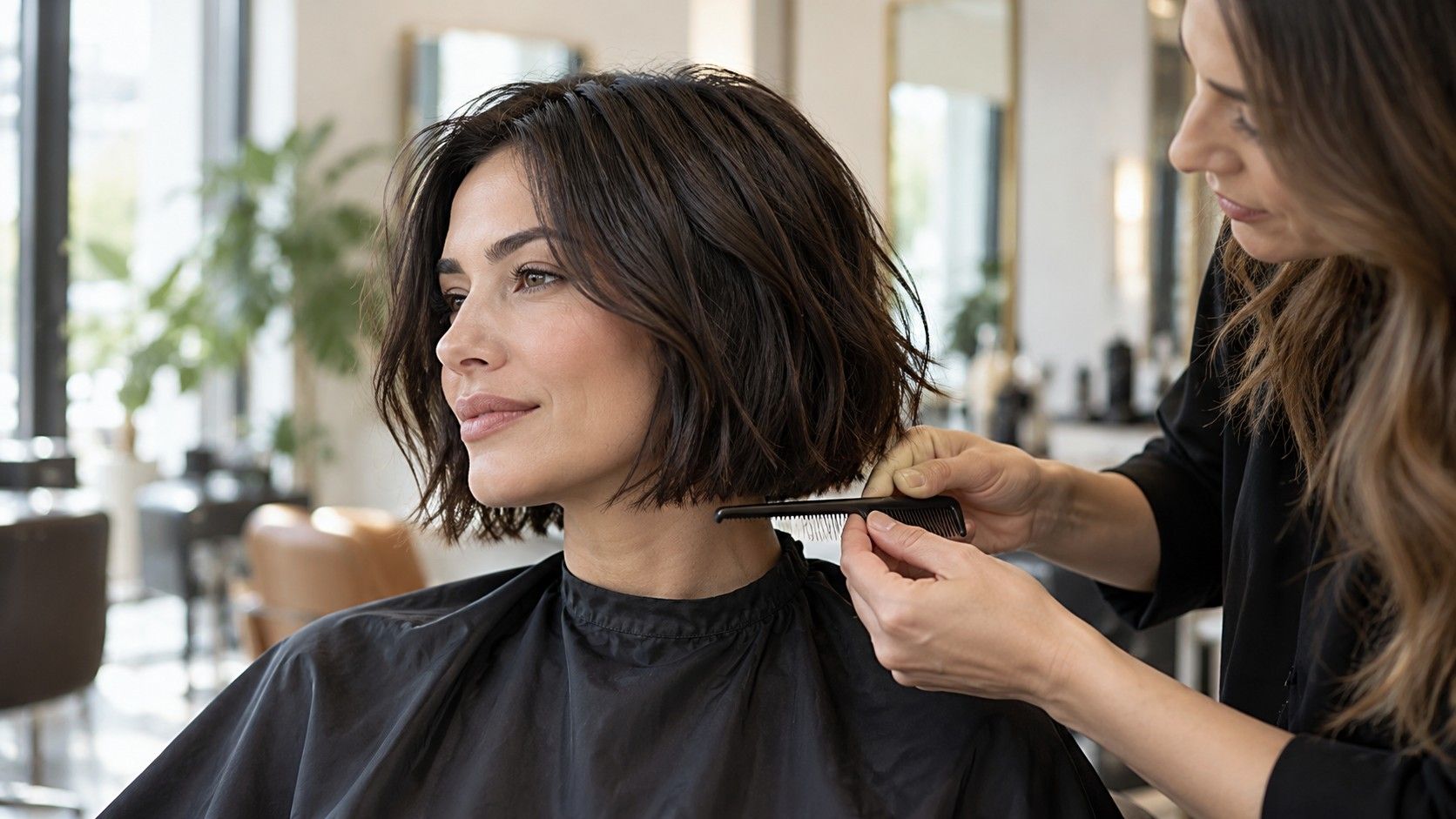
A blunt perimeter means the bottom edge is cut in a fairly solid line. On fine hair, that line can make the ends appear deliberate and visually weightier, especially in a bob or a shoulder-length cut. It is not an automatic fix for thin-looking hair: if the length is too long for your strands to hold their shape, the ends may still lie flat. Ask the stylist to compare a clean edge with a softly softened one at your current length, rather than assuming “blunt” means severe.
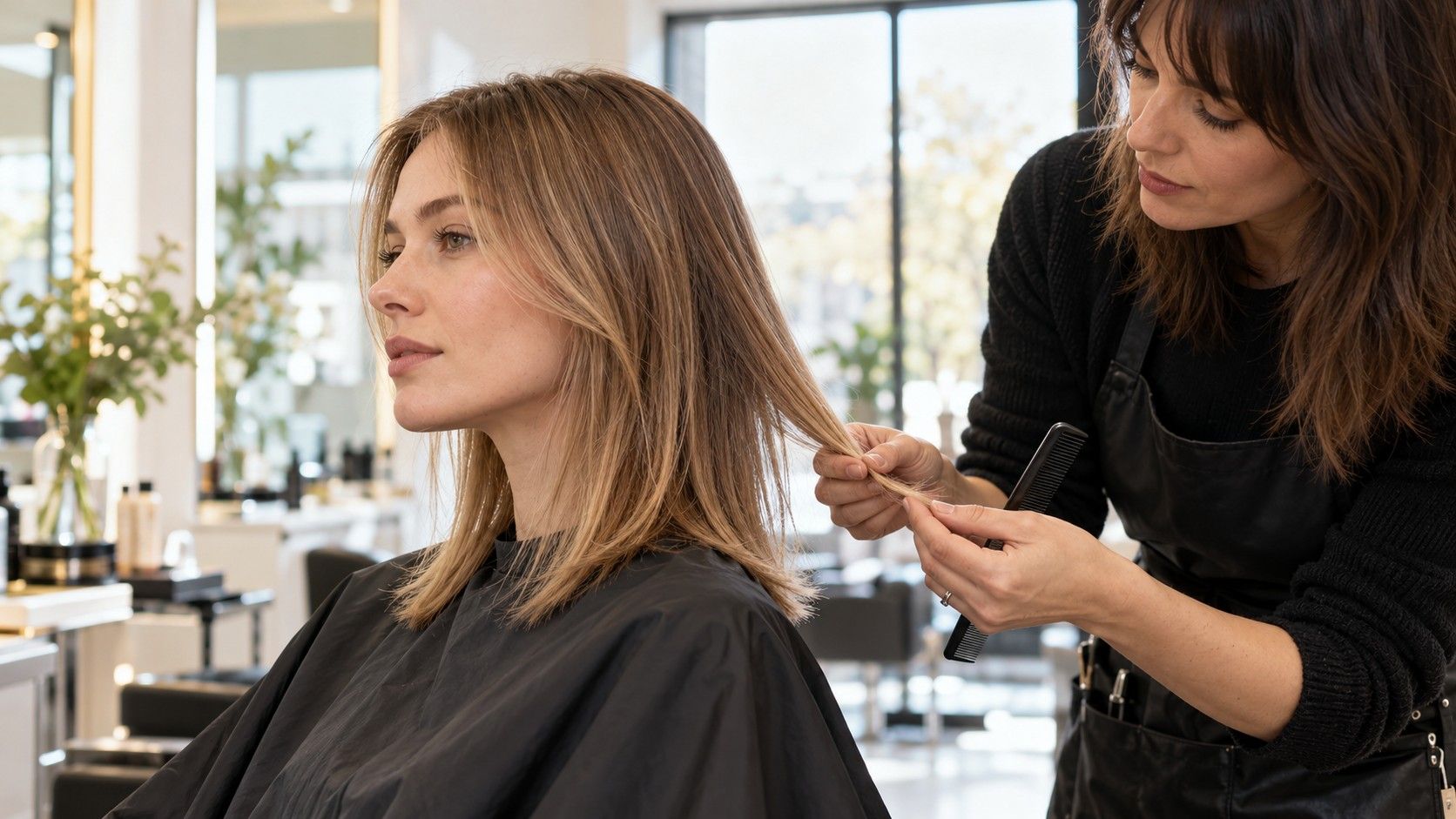
Layers remove weight from selected areas and can create separation or movement. Long, blended layers may help a full head of fine hair swing without changing the overall length much. Shorter or numerous layers can be less predictable when density is low: the ends may look less connected, and the top may need more styling to hold its outline. Bring a reference that shows the side and back, not only a finished front view. The back perimeter is often where you can see whether a layered shape still feels substantial.
There is a useful middle ground. A stylist can keep most of the baseline intact and add a few internal or face-framing pieces, adjusting them gradually rather than removing a large amount of hair at once. If you already have layers that disappear when your hair air-dries, explain that. The question is not whether layers are good or bad; it is how much separation you want, where you want it, and how much effort you will spend styling it.
Check crown, part and face framing before settling on length
Length changes how hair sits against the head. A shorter cut may feel lighter and easier to shape, while a longer line can give you more options for tying hair back. But the crown and part can decide whether either outline looks balanced on a typical day. If your crown whorl pushes hair in a particular direction, a very precise part may require daily adjustment. If the front grows forward, face-framing pieces or a fringe may separate differently from the reference photo.
Try the style with your normal part before making a decision. In a virtual try-on, keep your head position and lighting consistent while you compare options. A dramatic lighting change can make the hairline or crown seem fuller in one image and flatter in the next. If you can, compare a straight-on view with a slight turn; the profile may reveal whether a bob or shorter shape has the weight and contour you expected.
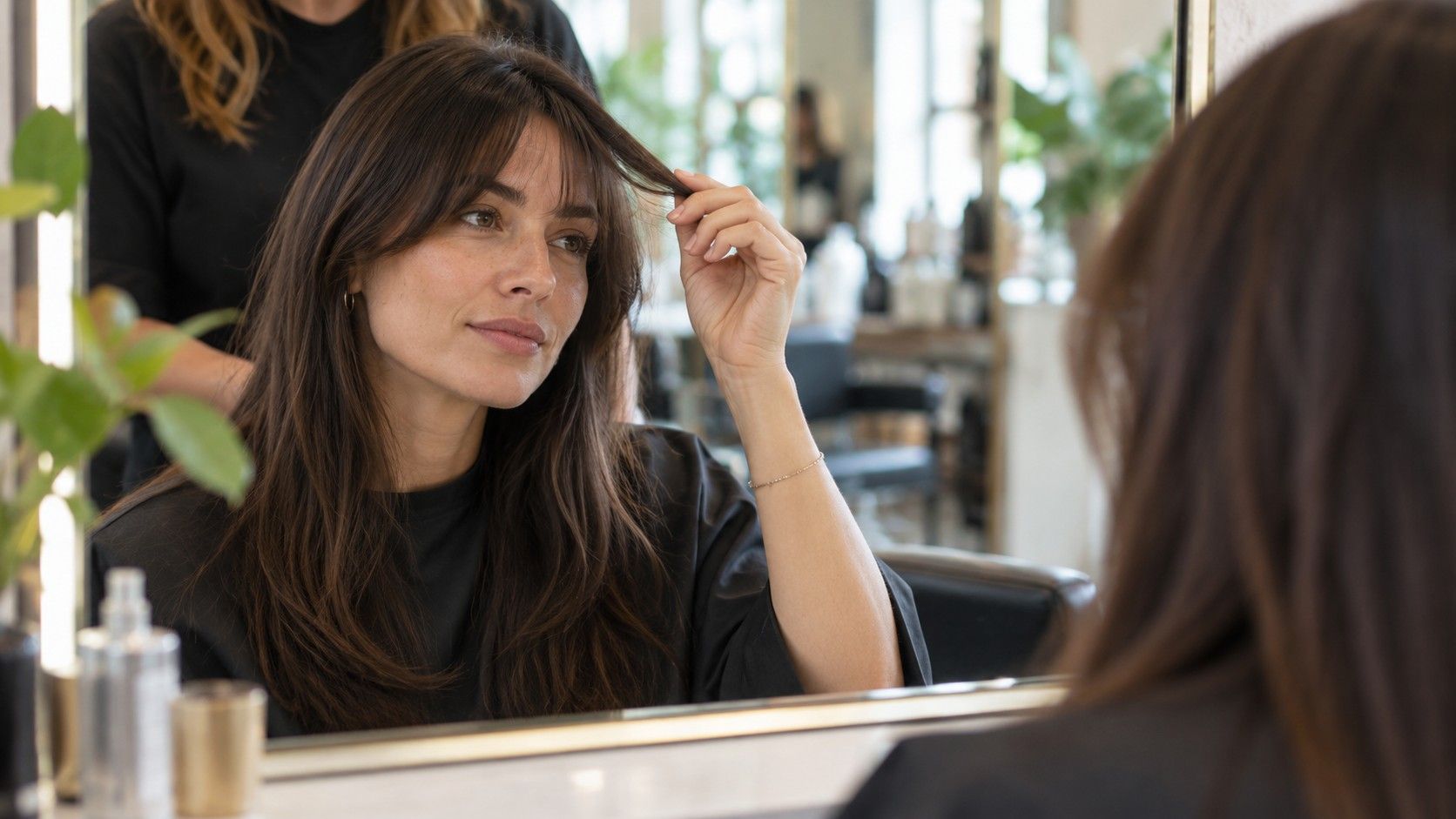
Face framing should respond to what you like seeing around your face, not a fixed face-shape chart. Consider whether you want hair tucked behind your ears, whether you wear glasses, and whether you prefer pieces that fall forward or stay away from your eyes. A small change in the front can alter the feel of a cut without committing to a major reduction in length. Ask for the shortest point to be agreed before scissors are used, especially if you are testing a fringe for the first time.
Plan for products, heat and your wash-day habits
A cut is only part of the finished look. Fine strands can respond noticeably to product amount, humidity, brushing and heat, but there is no single routine that suits everyone. A lightweight styling product may help some people create texture; too much product can leave hair feeling coated or separated. If you already have a routine that works, tell the stylist what you use and how much time it takes. If you usually air-dry, say so plainly instead of evaluating a cut by a salon blowout you do not plan to repeat.
Ask the stylist to show how the shape looks when finished in a way you can reproduce. A quick demonstration of where to direct the dryer, whether to lift at the roots, and how to handle the ends is more useful than a long list of products. Mention any heat tools you avoid or use only occasionally. A style that depends on daily curling or precise blow-drying may still be worth choosing, but it should be a conscious trade-off rather than a surprise after the appointment.
Consider how the hair behaves between washes. Some people find a shorter shape refreshes quickly; others prefer enough length to tie back on a busy morning. Fine hair can lose volume or become limp at different rates depending on scalp, product and activity, so your own experience is the best guide. Think about work, exercise, travel and the days when you have only a few minutes. That ordinary version of your week belongs in the haircut decision.
Compare options against the upkeep you will actually do
Before booking, write down the features you want to preserve and the ones you are willing to change. For instance: keep enough length for a low ponytail; make the ends look more intentional; avoid a fringe that needs daily shaping. This gives the stylist room to propose a cut that addresses your priorities instead of copying an image with different hair. You can also bring two references: one for the overall silhouette and another for the detail you like, such as a softly angled front.
Discuss how often the outline may need attention, while recognizing that timing varies with the cut and how quickly your hair grows. A short, precise shape can lose its original proportion as it grows; a longer, less structured cut may feel more forgiving. Ask what will change first as the hair grows out and whether a small tidy-up is optional or central to keeping the look. The answer helps you judge the real maintenance commitment without treating a schedule as a guarantee.
Use this comparison to organize the conversation, not to score one style as universally best:
| Option to discuss | What to inspect | Question for the stylist |
|---|---|---|
| Blunt bob or lob | How the ends sit at your current density | Can the edge stay solid without feeling heavy? |
| Long blended layers | Movement through the sides and back | How much separation will remain when I air-dry? |
| Face-framing pieces | Where the shortest sections land | Can we set the shortest point before cutting? |
| Fringe or curtain fringe | Growth direction and daily styling time | How will it sit with my natural part? |
At the appointment, describe a normal morning and show your hair as it usually behaves. Ask the stylist to explain the shape from the front, side and back before cutting, then check whether the planned shortest point is clear to both of you. If you remain unsure, a modest change can be a sensible first step; you can always remove more length later, while growing it back takes time. The best haircut idea for fine hair is the one whose shape, upkeep and day-to-day feel make sense for your actual strands.